mRNA Vaccines: A 2D Animation
2025
2D Animation
Created using Adobe After Effects, Premier Pro, Illustrator, Photoshop, and Procreate
Supervisor: Peter Leynes (Klick Health)
Audience: General lay audience
Format: 2D animation
Collaborators: Grace Gibson, Cynthia Pham
How do mRNA vaccines work?
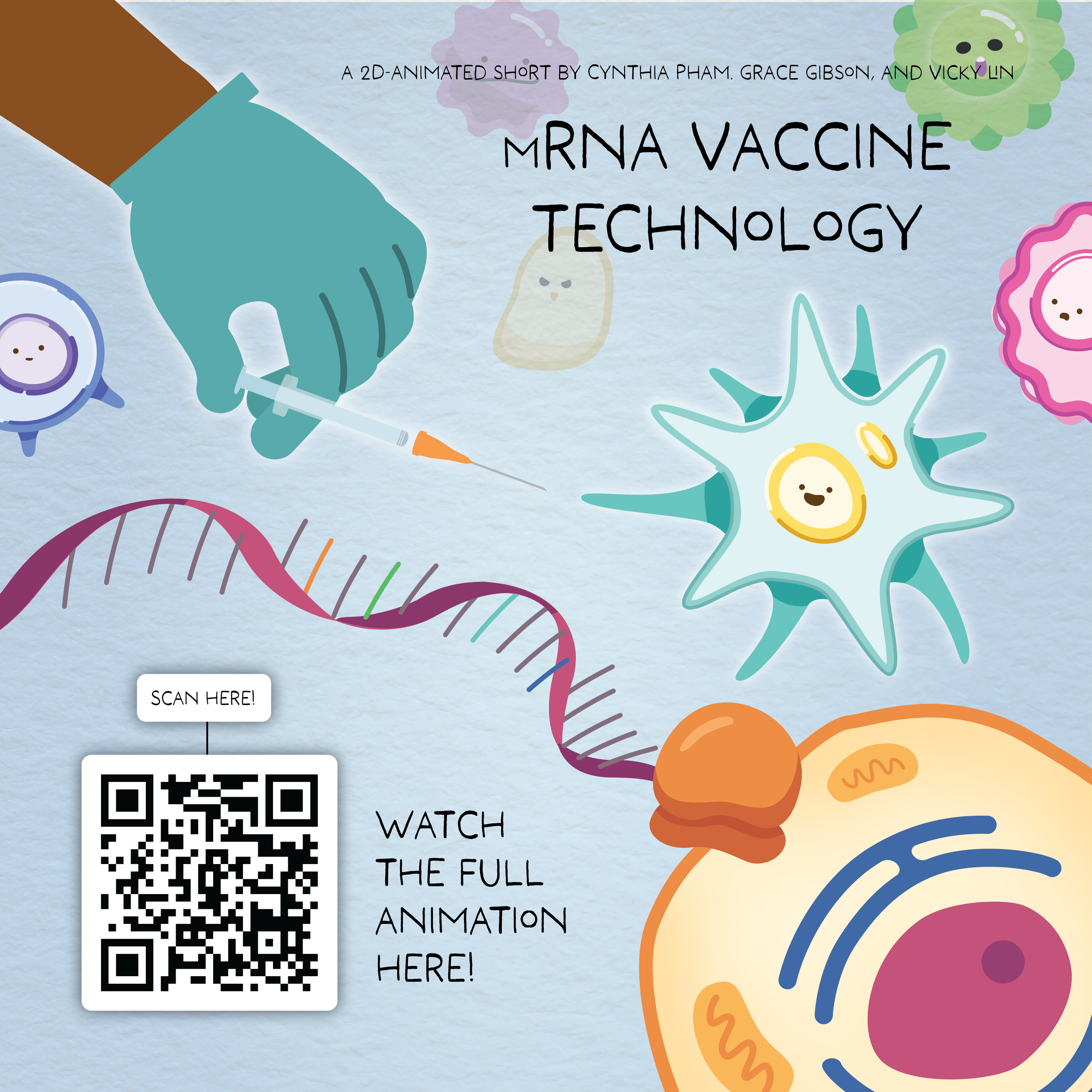
mRNA Vaccine Technology is a 2D animation that describes how mRNA vaccines work to train your immune system to recognize and fight off disease (such as SARS-CoV-2). It also highlights the adaptability of mRNA vaccines in responding to emerging variants. By using a friendly visual design and character-driven storytelling, the animation translates this complex scientific concept into an engaging and easy-to-understand narrative.
This is a collaborative project between Grace Gibson, Cynthia Pham, and myself.
The Challenge
How do you explain the mechanism of mRNA vaccines to lay audiences?
From delivering genetic instructions into cells, to downstream effects on the immune response, communicating these complex processes to a general audience requires balancing scientific accuracy with visual simplicity.
The challenge was to make an unfamiliar immunological process easier to understand, without overwhelming viewers with technical information.
My role involved gathering research and visual references from existing popular science animations to help develop a unique and cohesive visual language for our animation (compiled via Miro).
Taking inspiration from popular science animation YouTube channels like Kurzgesagt and TEDed, I developed a friendly visual language to guide our animation’s asset design to maintain an approachable tone while keeping the scientific concepts recognizable.
Explaining Immunology via Narrative
The narrative of our animation can be broken into three acts:
What happens to mRNA from the vaccine when it enters your body, and how they’re translated into antigens
How your immune system responds to these antigens to produce immunity against the antigen
The versatility of mRNA vaccines
I was responsible for producing the second act of the narrative which covers antigen presentation and the adaptive immune response.
Refined storyboard for act II describing the immune responses to the mRNA vaccine
Our pre-production process involved developing multiple storyboard concepts before collaboratively revising each iteration to optimize for clarity. Afterwards, we created our final storyboards and asset designs for our respective sections.
Character Design & Visual Storytelling
Using character-driven storytelling to explain complex processes.
To make the cellular components of the immune response more approachable and easier to follow, I developed my cellular “characters” around 3 main design principles:
-
The anthropomorphized cells provide a familiar narrative framework through which viewers could understand how the immune system works.
Facial expressions can make a character's role or response easier to interpret.
Distinct personalities can help viewers differentiate between multiple cellular components.
Reinforces the friendly, approachable visual style to make the subject feel less intimidating.
-
The design and silhouette of each cell type were based on the general appearance of these immune cells in real life.
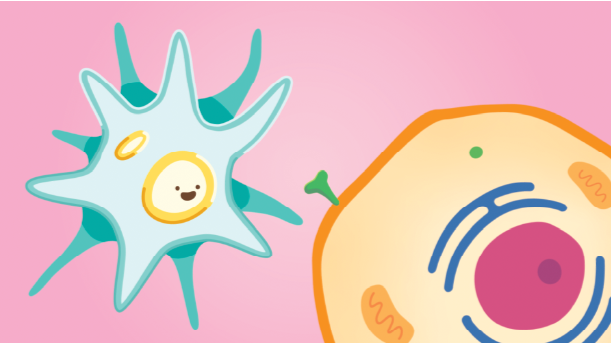
Dendritic cells included multiple long appendages (akin to dendrites), while the T and B cells remained spherical.
I gave T cells small rounded points that extend outwards upon activation. Its edgier appearance alludes to its cytotoxic function during the adaptive immune response.
B cells were designed with scalloped edges with a softer appearance to signify their larger supportive role in the adaptive immune response
-
Throughout the animation, we explore different scales including the molecular, cellular, and physiological level. Each setting was given a unique colour to contextualize where each process is occurring.
The characters/assets were drawn in a graphic, vector style using colour-blocking to distinguish each part of the cell. I wanted to make the cells look cute and appealing to audiences to humanize this complicated subject.
Layouts for each shot of the animation compiled in Adobe Illustrator




By giving each cell distinct facial expressions, characterizations, and personality traits, these generated visual cues that helped communicate their individual roles, responses, and interactions within the immune system.


2D Animation Production

Shot 1-2: Antigen recognition and presentation
Sequencing & Transitions
I used continuous movement to connect different stages of the immune response, allowing the T-cell presentation sequence to flow naturally into B-cell activation. This helped me establish the relationships between these cellular interactions and communicate that the immune response is an interconnected process, rather than a series of isolated events.
By maintaining visual continuity between scenes, I aimed to guide viewers through the biological narrative without disrupting their understanding of the process.
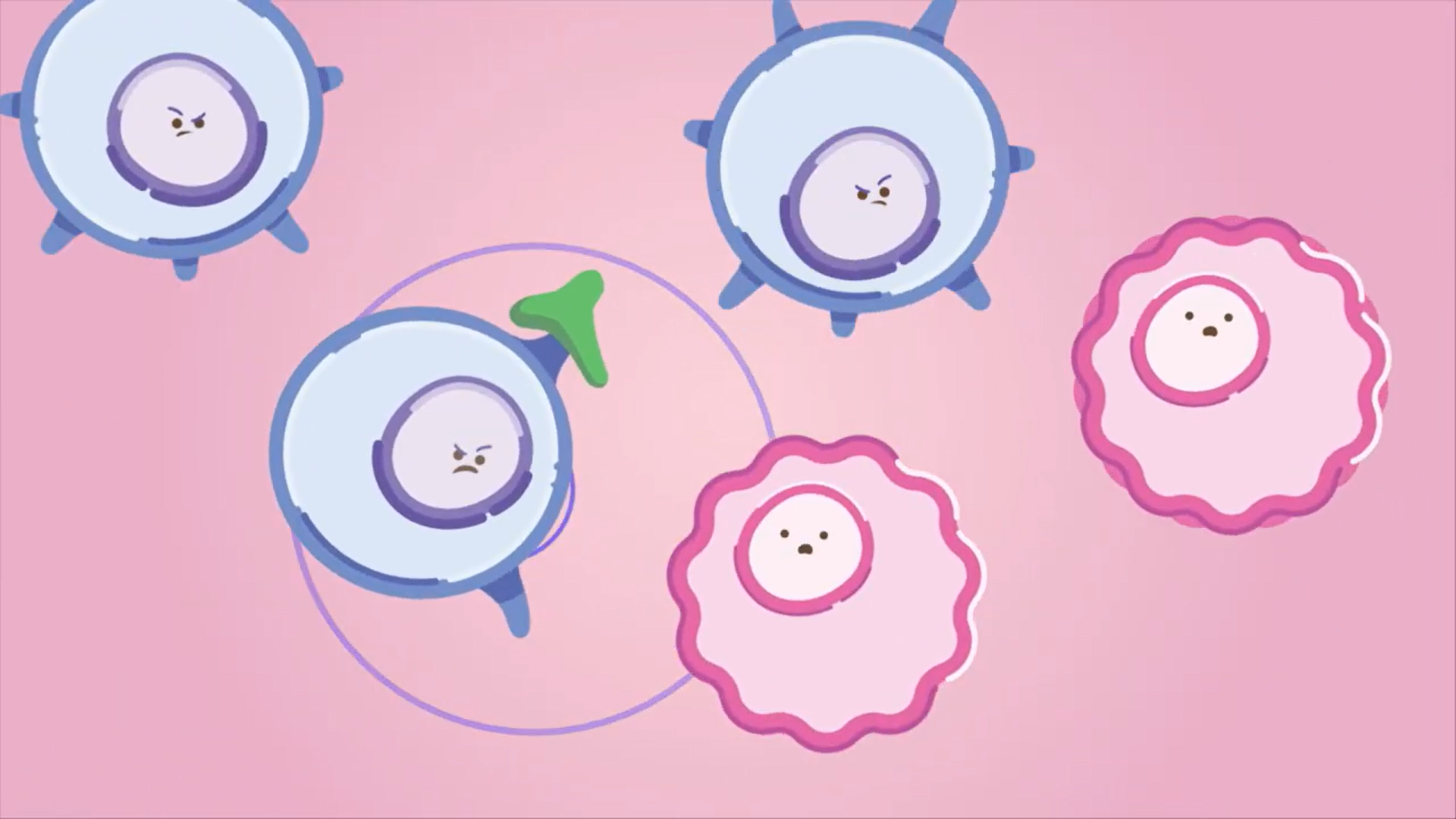
Shot 2: Immune activation of T cells (blue) and B cells (pink) against antigen
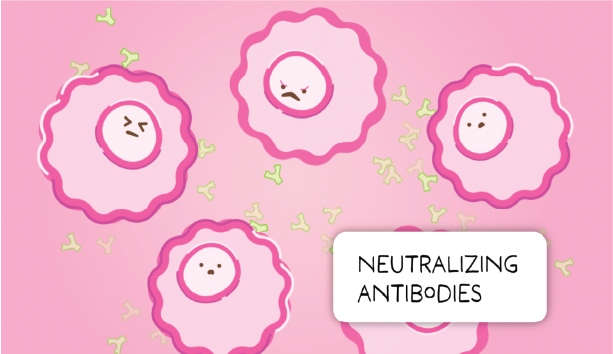
Shot 3: Transition to B cells producing neutralizing antibodies
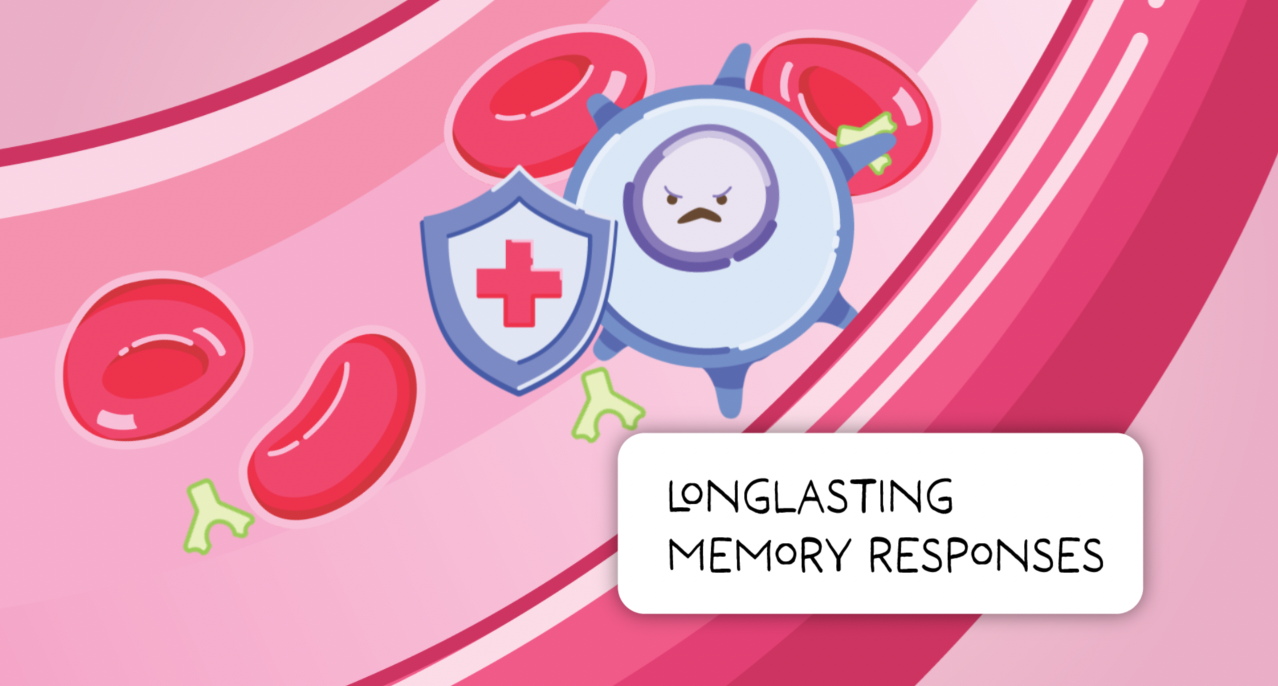
Shot 4: Activated T cells in circulation as long-lasting memory responses
Cell Animation
The cellular animation assets contained separate layers for the nuclei, body, and appendages so they could be animated separately, such as the dendrites on the dendritic cell which were animated using puppet pins.
I wanted the overall movement of each cell to be flowy and smooth (like cells floating in a medium), in contrast to direct cellular interactions where I kept movements jerky to instill urgency in the cell’s behaviour. For example, in shot 2 where the activated T cell is recruiting other cells.
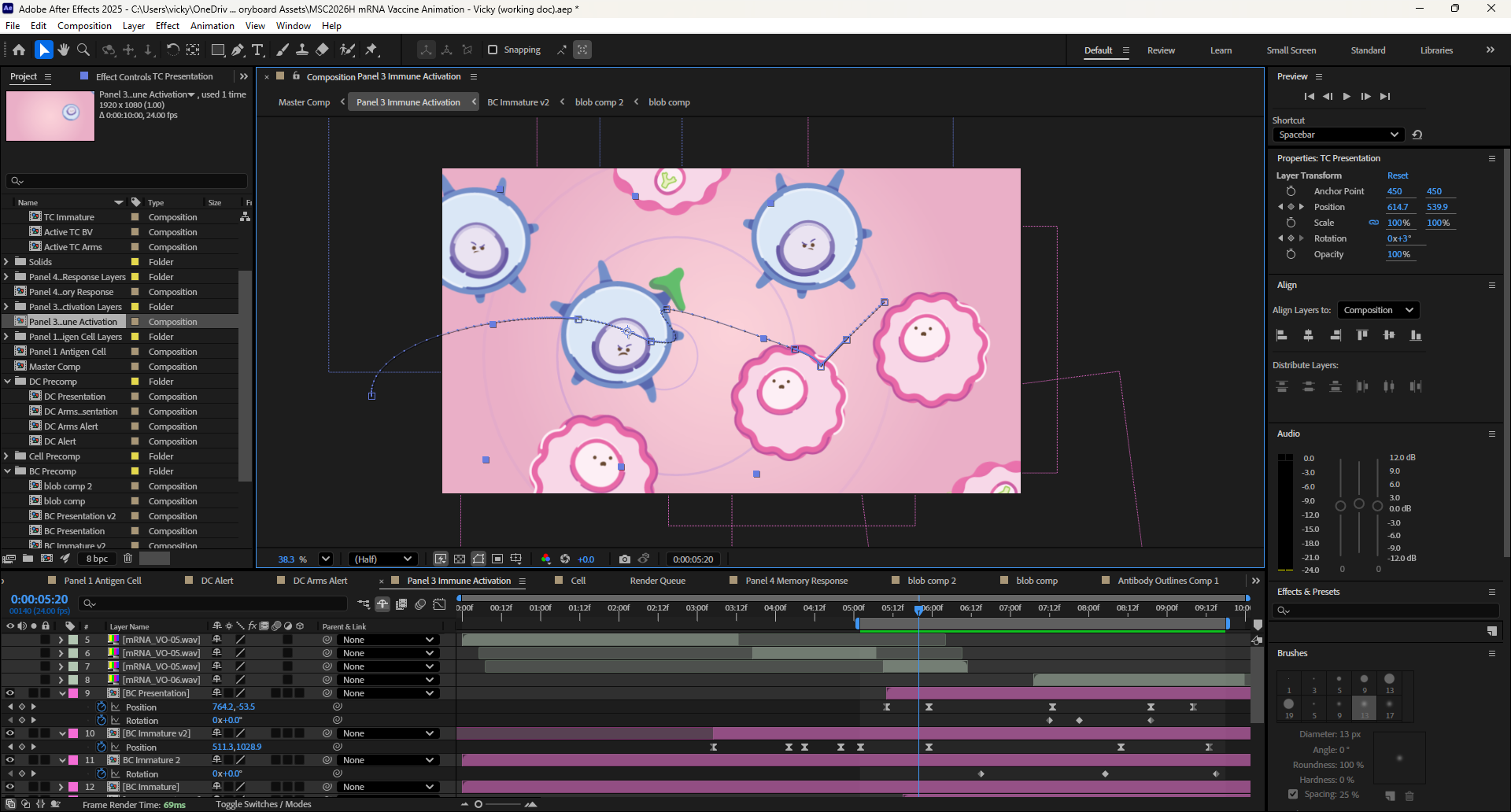
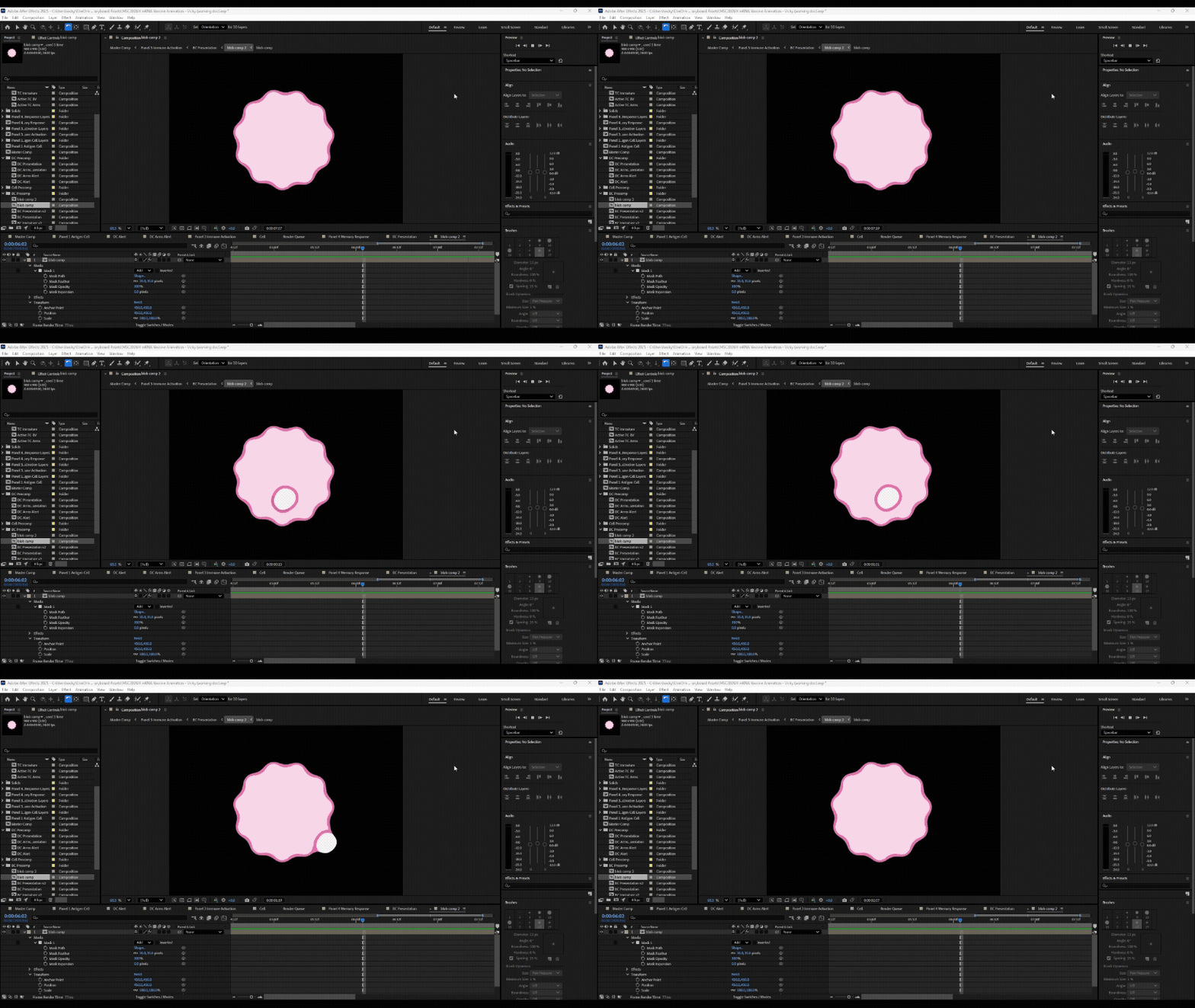
I animated B cell exocytosis on a separate cell base in After Effects before compiling the nucleus and antibodies.
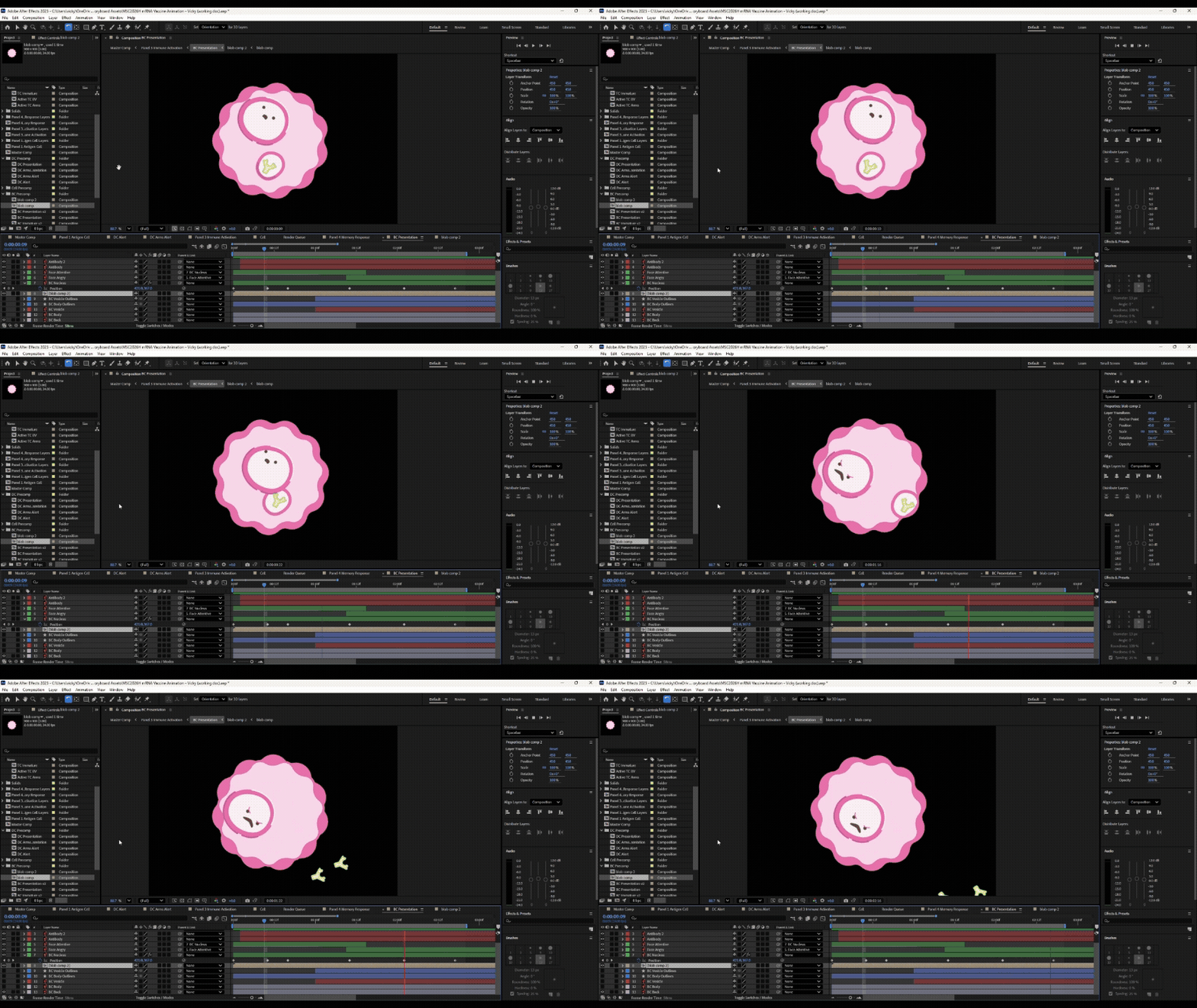
Subtle rotation of the bottommost cell shape layers creates ambient movement keeping the viewer’s eye engaged.
Final Outcome
Exploring character design and animation as a medium for scientific communications.
This collaborative project combines character-driven storytelling and motion design to explain how mRNA vaccines train the immune system to recognize and respond to pathogens, making an invisible biological process easy to understand and visualize.
By translating abstract cellular processes into an interconnected visual narrative, our goal was to make this complex scientific topic more approachable and engaging for audiences without a scientific background, and demystify mRNA vaccine technology.